
community economy
Living with flux in the Philippines: Negotiating collective well-being and disaster recovery
This paper presents three stories of communities in the Philippines. Each story reveals how local people and environments, in their own unique way, negotiate collective well-being in the face of climate uncertainty.
Making a living in the diverse economy of concrete: Commoning in a contested quarry
Abstract: The rapid expansion of urban development in Asia over the last 50 years has seen a rise in demand for building materials. From large construction companies to squatter settlers seeking to improve their housing, concrete is the building material of choice. In the Philippines there is plentiful supply of the limestone and aggregate (sand and gravel) required for concrete production. Alongside the large quarries owned by major corporations are small, often illegal quarries, supplying aggregate to the construction industry.
Redrawing the Economy: Summary Report
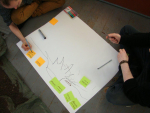
This is the summary report on Phase 1 of the Redrawing the Economy project. The report was prepared for the for the Scholar-Activist Project Award from the Antipode Foundation.
Following this phase of the project, the Redrawing the Economy website was produced by Kathrin Böhm. More information about the project is also available by clicking here.
Redrawing the Economy: Colombia Report
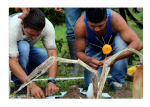
This report details the workshops conducted in Colombia as part of the Redrawing the Economy project. The workshops were conducted by one of the authors of Take Back the Economy, the translators of the Spanish version of Take Back the Economy, artists, and members of community economy initiatives from across Colombia.
Redrawing the Economy: Finland Report
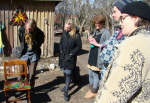
This report details the workshops conducted in Finland as part of the Redrawing the Economy project.
Redrawing the Economy: South Korea Report
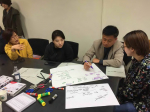
This report details the workshops conducted in South Korea as part of the Redrawing the Economy project. The workshops were conducted by one of the authors of Take Back the Economy, the translators of the Korean version of Take Back the Economy, artists, and members of community economy initiatives from across South Korea.
Trade as Public Realm / Economy as Public Space
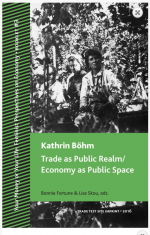
As part of Your Money or Your Life: Feminist Perspectives on Economy
Edited by Bonnie Fortune and Lise Skou
This series of short essays presents research, ideas, and proposals from four scholars and artists on contemporary life lived in the throes of global capitalism. The four women authors are responsible for creative opinions and approaches as to how we, as a culture, might come to inhabit different economic realities.
Impact Evaluation Report: Mutual Support Group 2014-2018
After five years of the consolidation, Mutual Support-Rekülüwun can be seen as part of a repertoire of creative responses by Mapuche families to the monetization of their rural economies in southern Chile, which has accelerated notoriously in the last decade. The project was set out in 2012 by the Mapuche-Lafkenche community of Llaguepulli and MAPLE, to create a member-owned institution while abiding to an indigenous cultural context and community protocols.
Re-embedding Economies in Ecologies: Resilience Building in More than Human Communities
The modern hyper-separation of economy from ecology has severed many of the ties that people have with environments and species that sustain life. In this paper we argue that a first step towards strengthening resilience at a human scale involves appreciating the longstanding social and ecological relationships that have supported life over the millennia. Our capacity to appreciate these relationships has, however, been diminished by economic science which encloses ecological space within more and more delimited confines.