Publications
Climate change is creating challenges and opportunities for community development. The challenges arise from declining biophysical conditions and the socio-political and economic barriers that delay, delegitimize or co-opt genuine community responses. Opportunities are arising from global climate change activism networks that provide new resources and discourses for activists and community organizers. These challenges and opportunities are unevenly shaped by the possibility for genuine democratic contestation in different contexts. In this article we draw on recent climate justice mobilizations in Aotearoa New Zealand. These mobilizations called for divestment from fossil fuel activities by blocking access to major banks around the country that directly support the industry.
The reproductive and care work predominantly undertaken by women has historically been undervalued in traditional measures of the economy. However, calls for more work, or better work for women (and men) doesn’t necessarily solve the issues surrounding waged labour such as zero hour contracts, the ‘double work day’, and other forms of increasing precarity and competition. In this article I explore how alternative forms of labour exchange in the Wellington Timebank provide one way in which subjects can partially operate outside the waged economy. I draw on Jacques Rancière’s understanding of how a radical equality underpins a democratic politics to explore the everyday negotiations around labour that occur in this alternative economy.
Within participatory geography and relational aesthetic art literature there have been calls to focus on how participation is framed, who is included and excluded, the types of relations involved and the effects of such practices. Linked to these concerns, questions have also been raised around how participants are framed and understood in participatory projects. For instance, as self‐determining and knowing subjects who become politically affirmed through participation, or as subjects caught up in complex processes of becoming. In this article I show how the participatory art project ‘Productive Bodies’ in Wellington, Aotearoa New Zealand, enabled participants to articulate the complex contradictions surrounding waged work, redundancy and unemployment.
The burgeoning literature on diverse and community economies has been relatively hopeful, exploring how people learn, enact new and reclaim other ways of meeting their needs outside of capitalist practices. For good reasons, much of this work has sought to avoid a conventional critical-leftist orientation, instead adopting what Gibson-Graham call a ‘weak theory’ approach ‘that welcomes surprise, entertains hope, makes connection, tolerates coexistence and offers care for the new’. Within this literature until recently, less attention has been given to how community economy collectives negotiate the everyday ethical dilemmas to enact interdependence.
In this paper, I consider the role of public engagement in the management of urban environments and its ability to undermine post-political discourses. In particular, I explore the ways in which the ethical propositions of an apoliticized environment are variously taken up uncritically, challenged, and sometimes modified through the public’s engagement with de-politicized discourses of environment management. Drawing from a case study in Philadelphia involving ecological restoration volunteers, I argue that volunteerism provides opportunities for the marginalization of the public, but also for confrontation and modification of expert knowledge.
This dissertation explores the contours of artistic economic activity through participatory action research conducted with artists and artisans in the Greater Franklin County, Massachusetts. The creative economy has drawn significant attention over the past ten years as a principle economic sector that can stimulate the redevelopment of post-industrial cities. However, dominant creativity–based development strategies tend to cater to the tastes of an economically privileged, and implicitly white, “creative class,’ leading to gentrification and social exclusion based on race, ethnicity, class, and gender.
From our atmosphere to the open ocean, from our languages to the rule of law, use without ownership underpins human experience. It is critical to our continued survival beyond the Anthropocene. These resources and properties are ineluctably shared because they are not wholly appropriable; they are used as part of a commons because they cannot be entirely exchanged. They are held in common because they cannot be completely enclosed. This essay is concerned with the use of and care for the commons as an object of inquiry, a practice of all social life, and as the operative condition of intellectual production.The essay continues the ‘Foundational Essays’ series developed by the Institute for Culture and Society on basic concepts and approaches in social enquiry and practice.

How can we work to transform our economies so that all can survive well together? In the Millennium declaration, signatories pledged to “spare no effort to free our fellow men, women and children from the abject and dehumanizing conditions of extreme poverty”, eventually resulting in the detailed targets of the Sustainable Development Goals (SDGs). Setting targets is a management strategy which assumes the problem of poverty is primarily a lack of goal-setting, vision, or resource allocation. This is one important aspect of the problem to be sure, and the SDG process has certainly altered resource allocations and produced results.
This paper is based on a talk I delivered at Rethinking Marxism’s 2013 international conference in conversation with Jodi Dean at a plenary session entitled “Crafting a Conversation on Communism.” I attempt to clear up a point of confusion in Dean’s reading of postcapitalist politics and the work of the Community Economies Collective (of which I am a member) in order to arrive at a point we share in common: the immanent relevance of communism to contemporary politics, as evidenced by Occupy and other events.
This paper considers the relevance of Franciscan monastic practice to contemporary postcapitalist politics in the time of the Anthropocene. Giorgio Agamben’s reflections on the monastic revolution of the eleventh and twelfth centuries explore the different relationships between the rules governing monastic life and materiality, wherein the renunciation of property and the practice of highest poverty give the greatest expression of a collective, monastic form of life. The embodied connection between having a rule and living it contrasts starkly with emergent Church doctrine that introduced a cynical split between the sacred and the material: good or bad, the priest only need say the words.
Over the past 20 years, the term “solidarity economy” (SE) has come to refer to economic activities that seek to promote overall quality of life within a community, as opposed to prioritizing private profit maximization in a competitive market. The organizations and enterprises comprising the solidarity economy tend to be collectively and democratically run for the benefit of their members. The activities associated with the solidarity economy do not preclude turning a profit (or generating surplus), nor do they necessarily require disengaging entirely from market exchange. But they usually exhibit a substantial alignment with ethical principles of social equity and solidarity, environmental sustainability, and pluralist democracy.
In this paper we use the concept of surviving well to reframe happiness.
Food production is a feminist issue, and feminist research offers many fruitful ways of examining its different sectors. In this article I incite a dialogue on food production between feminist theories on naturecultures and the economy. Using concepts of companion species and diverse economies I analyse weed management as multispecies relations and ask, how voluntary weeding practices open up space for
Social enterprise (or business driven by social objectives) is a prominent focus of development. In higher income countries it is a strategy for regional development or regeneration by creating optimal levels of social value from under-utilised resources. In developing countries, social enterprise offers hope for sustainable development by reducing dependency on aid and by developing markets and improving economic growth. Social enterprise is widely linked to ‘business at the bottom of the pyramid’, there is particular attention to heroic 'social entrepreneurs'. But critical literature shows a tension between the top-down ‘development’ driven view of social enterprise and a bottom-upwards grassroots community development approach driven by wellbeing.
Des mouvements sociaux partout sur la planète se révoltent contre la démocratie libérale et le capitalisme tout en expérimentant des manières d’être, de penser et de faire basées sur l’autonomie, le respect de la diversité et l’aide mutuelle. Dans cet article, les pratiques politiques, culturelles et économiques du Centre social autogéré de Pointe-Saint-Charles déployées durant la lutte pour l’appropriation collective du Bâtiment 7 sont examinées à l’aune du concept d’autonomie collective. En rendant visibles ces pratiques subversives, l’analyse permet de saisir la portée révolutionnaire de cette initiative libertaire située en marge de l’économie sociale au Québec.
Ce texte est un exercice de réflexion. Plutôt que de travailler avec des étiquettes idéologiques, j’ai envie de faire de la gymnastique mentale avec des concepts et des pratiques qui m’inspirent. Pour en arriver à proposer une méthode d’organisation qui soit porteuse d’espoir (un autre vivre ensemble est possible) tout en étant ancrée dans un pragmatisme mobilisateur. Je commencerai par expliciter mon point de vue sur l’exploitation et l’oppression des humains et de la nature. Puis, je reviendrai sur les idées mises de l’avant par Murray Bookchin et sur l’application de ses concepts d’écologie sociale et de municipalisme libertaire par le collectif anarchiste la Pointe libertaire. Ensuite j’aborderai les propositions de J. K.
This is the summary report on Phase 1 of the Redrawing the Economy project. The report was prepared for the for the Scholar-Activist Project Award from the Antipode Foundation.
Following this phase of the project, the Redrawing the Economy website was produced by Kathrin Böhm. More information about the project is also available by clicking here.
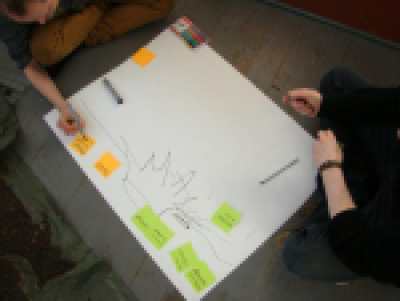
This report details the workshops conducted in Colombia as part of the Redrawing the Economy project. The workshops were conducted by one of the authors of Take Back the Economy, the translators of the Spanish version of Take Back the Economy, artists, and members of community economy initiatives from across Colombia.
Workshops were also conducted in Finland and South Korea, and there is a summary report for the Scholar-Activist Project Award from the Antipode Foundation.
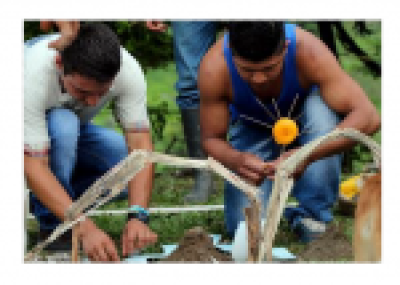
This report details the workshops conducted in Finland as part of the Redrawing the Economy project.
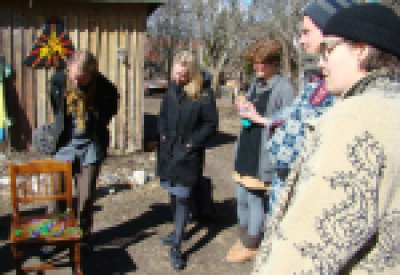
This report details the workshops conducted in South Korea as part of the Redrawing the Economy project. The workshops were conducted by one of the authors of Take Back the Economy, the translators of the Korean version of Take Back the Economy, artists, and members of community economy initiatives from across South Korea.
Workshops were also conducted in Colombia and Finland, and there is a summary report for the Scholar-Activist Project Award from the Antipode Foundation.
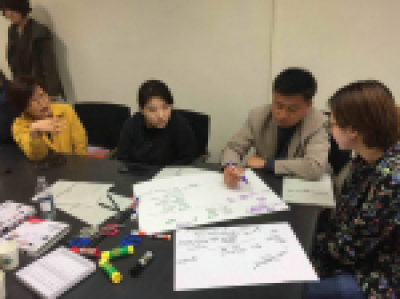
The book is titled Learn to Act, because that’s what we set out to do. The title is a clear proclamation towards a form of learning which is both an act of commoning and a moment in which knowledge becomes relative, collective and applied. Learn to Act is about the near future, how to act, and how to support each other.
Researchers have long recognized practices of mutual aid, reciprocity and sharing as prevalent features of everyday community life in Southeast Asia. Such practices are often represented as persistent vestiges of pre-capitalist societies and variously categorized as aspects of 'informal economies,' 'patron-client' relations or 'social capital.' In debates about capitalist development these 'relict' practices are seen as standing in the way of modern economic growth, as something to be overcome or enrolled into the mechanics of transition to market capitalism - that is, they are harnessed into a narrative of either decline or transcendence.
This intervention contributes to feminist and queer responses to Brenner and Schmid’s ‘planetary urbanization’ thesis. I discuss the generative potential of their attempts to craft alternative urban research pathways and their critique of urban age discourse, a body of work that defines cities as static sites of ‘innovation’, ‘creativity’, and ‘sustainability’. However, echoing critics of the planetary urbanization approach, I contend that Brenner and Schmid’s research schema risks reproducing exclusionary analytical hierarchies by promoting a totalizing, ‘god-trick-like’ standpoint and ignoring marginalized feminist, queer, and praxis-oriented urban studies approaches. As a result, planetary urbanization ignores situated and relational knowledges and lived experience.
There is a well established body of feminist scholarship critiquing the methodological and epistemological limits of an “objective” view from nowhere in urban research and political economy frameworks. Recent developments, such as the planetary urbanization thesis, have reignited feminist efforts to counter patriarchal, colonial, and hegemonic ways of knowing. Here, we recount our frustrations with the reproduction of dominant political economic modes of “knowing” urban processes such as gentrification and culture-led regeneration in research that seeks to uncover the production of neoliberal spaces and subjectivities.
Book translation of Lester R. Brown's The Great Transition: Shifting from Fossil Fuels to Solar and Wind Energy (W. W. Norton & Company, 2015), translated from English to Finnish by Eeva Talvikallio, published by Into Kustannus, 2017.

Some of the perennial tensions in applied theatre arise from the ways in which practice is funded or financed. They include the immediate material pressures and pragmatic dilemmas faced by theatre makers on the ground and the struggle to secure the resources needed to produce and sustain work or to negotiate the dynamics and demands of particular funding relationships. In the applied theatre literature, there are many examples of groups and organizations that have compromised their political, pedagogic, artistic or ethical principles to make their work economically viable. There are also ongoing debates about the nature of the relationship between applied theatre and the local, national and global economic conditions in which it is produced.
Fair trade certification is a mechanism used by coffee cooperatives to assist farmers with accessing cash income and securing a better price for their product. Third-party certifiers regulate the fair trade label, which is tied not only to price, but also to standards for production and development. In this paper I examine these standards as they are deployed in self-declared autonomous communities in the highlands of Chiapas, Mexico. I argue that third-party certifiers through enforcement of standards, and surveillance attempt to create a producer subject who becomes “fixed” through certification.
A review essay of three books that take up the urban commons: Dellenbaugh, Kip, Bieniok et al. (eds.), 2015, Urban Commons: Moving Beyond State and Market; Borch and Kornberger (eds.), 2015, Urban Commons: Rethinking the City; and Ferguson (ed.), 2014 Make_Shift City: Renegotiating the Urban Commons.
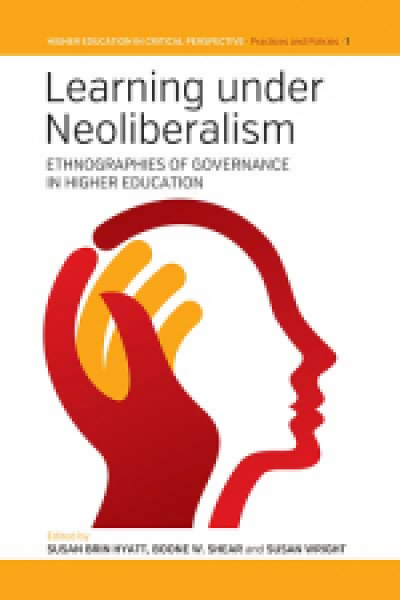
As part of the neoliberal trends toward public-private partnerships, universities all over the world have forged more intimate relationships with corporate interests and more closely resemble for-profit corporations in both structure and practice. These transformations, accompanied by new forms of governance, produce new subject-positions among faculty and students and enable new approaches to teaching, curricula, research, and everyday practices. The contributors to this volume use ethnographic methods to investigate the multi-faceted impacts of neoliberal restructuring, while reporting on their own pedagogical responses, at universities in the United States, Europe, and New Zealand.