
Publications
In this essay, I envision the university, not simply as a discreet institution with formal boundaries to attend to and defend from neoliberal and conservative assaults, but as a location of possibility from which to locate and advance projects that connect students and others to the possibility of other economic worlds.
Asset Based Community Development or Asset-Based and Citizen-Led Development (ABCD) is being used in a range of development contexts. Some researchers have been quick to dismiss ABCD as part of the neoliberal project and an approach that perpetuates unequal power relations. This paper uses a diffracted power analysis to explore the possibilities associated with ABCD as well as the challenges. It focuses on the application of ABCD in the Philippines, Ethiopia and South Africa, and finds that ABCD can reverse internalized powerlessness, strengthen opportunities for collective endeavors and help to build local capacity for action.
In this paper, Azusa Yamashita leads us in reflecting on the experiences of LGBT people following the Japanese tsunami and earthquakes of 2011, based on her work setting up a LGBT hotline with Iwate Rainbow Network.
This paper was commissioned by the Next System Project (co-chaired by Gar Alperovitz and by Gus Speth). The paper details community economies thinking, and covers the following topics:
- key commitments of community economies thinking
- understandings of transformation
- community + economy
- strategies for cultivating community economies (namely, applying the language of diverse economies and broadening the horizon of economic politics)
The paper includes examples of community economies from across the globe (including those that are 'local' an place-based (such as Hepburn Wind) to those that are 'global' (such as the Montreal Protocol on Substances that Deplete the Ozone Layer).

The modern hyper-separation of economy from ecology has severed many of the ties that people have with environments and species that sustain life. In this paper we argue that a first step towards strengthening resilience at a human scale involves appreciating the longstanding social and ecological relationships that have supported life over the millennia. Our capacity to appreciate these relationships has, however, been diminished by economic science which encloses ecological space within more and more delimited confines. Our task is thus to cultivate new sensibilities that will enable us to enact resilience in both our thinking and practice.
The record number of submissions we received in February 2016, apart from posing a major editorial challenge, confirmed our original intuition that a forum on the organization of alternative economies is timely. With this special issue, we would like to contribute to the current conversation on alternative economies, which is taking place in this journal (e.g. Bretos and Errasti, 2017; Cheney et al., 2014; Gibson-Graham, 1996b; Safri, 2015) and the broader organization studies community (e.g.
This commentary was invited by the special editors of this issue and is partly based on the Community Economies session that the four authors organised at the Social Movements Conference III: Resistance and Social Change in Wellington, 2016. During the session, a number of questions were asked by participants. Some of these questions were new for us, while others have been asked of Community Economy scholars before. All of the questions however, point to ongoing pressing concerns around how to act ethically with human and non-human others in ways that decolonise our colonial, capitalist-oriented economy and society.
In debates over post-capitalist politics, growing attention has been paid to the solidarity economy (SE), a framework that draws together diverse practices ranging from co-ops to community gardens. Despite proponents’ commitment to inclusion, racial and class divides suffuse the SE movement. Using qualitative fieldwork and an original SE dataset, this article examines the geospatial composition of the SE within the segregated geography of Philadelphia. We find that though the SE as a whole is widely distributed across the city, it is, with the exception of community gardens, largely absent from poor neighborhoods of color. We also identify SE clusters in racially and economically diverse border areas rather than in predominantly affluent White neighborhoods.
This chapter, written for the Thinking in the World Reader (Bloomsbury Press), seeks to challenge and think beyond a key blockage in contemporary life: the conventional distinction between economy and ecology. As we argue, the distinction between these two domains severs us from transformative, ethically-infused encounters with our constitutive interdependencies. We explore one possible way to affirm and expand the politicization of this interdependence: a notion of "ecological livelihoods" linked with an ethics and politics of commoning.
This paper aims to document the nature of social enterprise models in Australia, their evolution and institutional drivers. Design/methodology/approach: The paper draws on secondary analysis of source materials and the existing literature on social enterprise in Australia. Analysis was verified through consultation with key actors in the social enterprise ecosystem. Findings: With its historical roots in an enterprising non-profit sector and the presence of cooperative and mutual businesses, the practice of social enterprise in Australia is relatively mature. Yet, the language of social enterprise and social entrepreneurship remains marginal and contested.
This project was funded by the NSW Office of Environment and Heritage (OEH), and delivered by the Centre for Social Impact (CSI) Swinburne in partnership with Community Recycling Network Australia (CRNA) and Resource Recovery Australia. The project aims were: to improve understanding of how the environmental and social impacts of NSW-based community recycling enterprises are currently measured; to use this information to suggest some common indicators against which they could more effectively document and report on their performance in these areas; and to consider the implications of this work for sustainability-focused social enterprises more broadly.
Public sector interest in social innovation is rapidly growing around the world. However, only recently has substantial empirical research emerged to support practice. Through combining Community Economies research methods with emerging new public governance literature, this thesis makes a unique contribution to the field. A language politics is developed, based on two experimental conceptual frameworks. Using these, social innovation assemblages are explored, with a particular focus on social procurement relationships. Openings for performing new kinds of economy are established, offering a counter to ‘fast policy’ approaches and contributing to decentring prevailing discourses of intractable ‘wicked problems’.
This discussion paper documents gaps in professional legal support for small-scale sustainable economy initiatives (SSEIs) in Australia. It draws on (Section 2 and Appendices) data from multiple sources, including a three-year research project on the legal and regulatory support structures for SSEIs, two small surveys of social enterprise, a review of eight cognate initiatives, a review of law firm websites and direct contact with nine social enterprise-related capacity building programs around Australia.The paper first discusses what we mean by SSEIs and their relevance to current debates about innovation, the new economy and the need to respond to urgent economic and environmental challenges (Section 3).
This paper is part of a series of Working Papers produced under the International Comparative Social Enterprise Models (ICSEM) Project. Launched in July 2013, the ICSEM Project (www.iap- socent.be/icsem- project) is the result of a partnership between an Interuniversity Attraction Pole on Social Enterprise (IAP-SOCENT) funded by the Belgian Science Policy and the EMES International Research Network. It gathers around 200 researchers—ICSEM Research Partners—from some 50 countries across the world to document and analyze the diversity of social enterprise models and their eco- systems. As intermediary products, ICSEM Working Papers provide a vehicle for a first dissemination of the Project’s results to stimulate scholarly discussion and inform policy debates.
Scholars from the social sciences and humanities are increasingly seeking to improve the relevance and social impact of their research beyond the academy. In this context, 'designerly' thinking and methods are being drawn on to inform social change agendas, and a range of new relationships and collaborations are forming around this node of activity. This article critically reflects on this trajectory through a dialogue between ethnography, design and theoretical principles from anthropology and human geography. We draw on the example from a workshop during the ICD Symposium and our response to the challenge of reimagining Western Sydney as 'Riverlands, Sydney'.
This document provides insights into current social procurement policy and practice within the public sector in Australia. It draws from interviews with representatives of three State Government departments, and from resource materials previously produced.
The report includes case studies which provide snapshots of different ways that government entities are utilising both direct and indirect social procurement strategies to support the implementation of local economic development policies and programs. Through harnessing and targeting their purchasing power they are engaging residents and supporting local small enterprise growth and stability, fostering the economic capacity of a local area so as to improve quality of life for local residents.
In 1980, R. W. Butler published his tourism area cycle of evolution model graphing a correlation of number of tourists on the y-axis and time on the x-axis. Although a location’s capacity for number of tourists and the specific number of sustainable years may vary from location to location, Butler proposed that every tourist location evolves through a common set of stages: exploration, involvement, development, consolidation, stagnation, and then some variation of rejuvenation or decline. Butler’s model frames the resources that enable a region to become a tourist destination as finite and ultimately exhaustible.
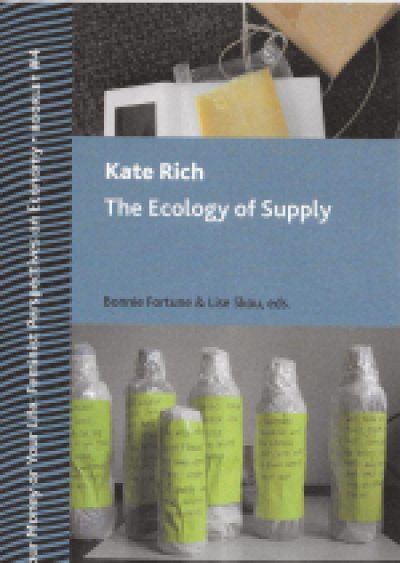
Book #4 in the series:Your Money or Your Life: Feminist Perspectives on Economy #1-4.
This pilot study provides initial insights into how residents living in Western Sydney keep cool during the hottest parts of the year and how they would like to see their living environments, at home and out and about, modified to improve wellbeing in a climate changing world.
(...) Je vous raconte tout cela, car je sais que des camarades vivent des situations similaires à un moment donné dans leur vie. Plusieurs décident de passer à autre chose ou sont forcés de le faire pour cause de santé ou encore, de précarité. Il y en a d’autres qui se disent: «Bof, mes idées de jeunesse, c’était la folie, de l’utopie», et décident alors de s’impliquer dans les luttes électoralistes ou marxistes pour la prise de l’État. C’est dans ce tourbillon que je suis tombée sur J.K. Gibson-Graham...
As part of Your Money or Your Life: Feminist Perspectives on Economy
Edited by Bonnie Fortune and Lise Skou
This series of short essays presents research, ideas, and proposals from four scholars and artists on contemporary life lived in the throes of global capitalism. The four women authors are responsible for creative opinions and approaches as to how we, as a culture, might come to inhabit different economic realities.
From today’s perspective, early 20th century ‘Area Studies’ texts represent a relic form of geographical research and writing. These compendiums of place-based knowledge present what we now consider to be a layperson’s understanding of ‘geography’ – details of landforms, climate, land use, economic activities, urban patterns and so on. This empirical content is described in language littered with the judgemental adjectives associated with hierarchical knowledge systems
Many designers today (including ourselves) are experimenting with how their practice can engage in meaningful ways with the complexity of pressing social and environmental issues. Being very much concerned with the politics and power relations that run through such issues, in this paper we will explore what points of orientation the framework of the ‘commons’ and that of ‘community economies’ – seen from an autonomist and feminist Marxist perspective – can offer when working on socially and politically engaged projects.
Recent uses of performativity have been engaged with bridging the gap between the economy and politics. The concept of performation has for instance been used to enable discursive and material assemblages that challenge this dichotomy, with the general aim of transforming the economy. While the overall intent of this article is to contribute to this bridging, its direction of travel is the opposite: to bring the economy into politics. Specifically, it situates the notion of performativity within studies on grassroots politics in a material sense. First, it discusses some of the leading scholarship on grassroots movements, focusing on their take on the economy.
In the early 1990s, a group of housing activists from Washington, D.C. traveled to Johannesburg to help start the first housing cooperatives in South Africa’s history. These activists were from Washington Innercity Self Help, or WISH, a community-based group that directed much of its work towards helping low-income tenants purchase their buildings from their landlords and form limited-equity housing cooperatives – collectively owned housing that, because of restrictions placed on resale prices, would be affordable to poor people for years to come.
This paper analyzes the development of an inventory of vacant buildings and land in Trenton, New Jersey that resulted from a research partnership between the Rutgers University Center for Urban Environmental Sustainability; Isles, Inc. a Trenton-based non-governmental organization; and the City of Trenton. Participatory research design between university and NGO staff led to a smartphone GIS survey tool that functioned through web and desktop GIS. University students and community residents collected data through a smartphone GIS application and visually inspected almost every property within the city’s boundaries.