Publications
In this paper we present a method for valuing the multidimensional aspects of urban commons. This method draws from and contributes to a broader conception of social or community returns on investment, using the case and data of a vibrant project, strategy, and model of ecological resilience, R-Urban, on the outskirts of Paris. R-Urban is based on networks of urban commons and collective hubs supporting civic resilience practices. We use data from 2015, the year before one of the hubs was evicted from its site by a municipal administration that could not see the value of an ‘urban farm’ compared to a parking lot.
An introduction to Planning for Feminist and 2SLGBTQ+ Spaces. When I was a planning student in the late 1990’s, women activists contesting patriarchal city building with Women Plan Toronto (WPT) sparked my interest in planning for women and 2SLGBTQ communities. Throughout the 1980s and 1990s, WPT encouraged public sector planners and policy makers to plan women-friendly neighbourhoods that included accessible and affordable housing and public spaces and parks amenable to children, seniors and people with disabilities. WPT also advocated practical alternatives to address women’s planning concerns, including strategies for designing public transportation suitable for wheelchairs and strollers and ensuring women’s and children’s safety in urban design.
This paper is based on the 2016 Neil Smith lecture presented at St Andrews University. It honours the work of a geographer whose pioneering work on uneven development and the complex relations between capitalism and nature shaped late 20th century thinking inside and beyond the discipline of Geography. Today the collision of earth system dynamics with socio-economic dynamics is shaking apart Enlightenment knowledge systems, forcing questions of what it means to be a responsible inhabitant on planet earth and how, indeed, to go onwards ‘in a different mode of humanity’ (to quote eco-feminist philosopher Val Plumwood).
This paper contributes an intersectional feminist analysis and methodological approach to debates about commoning and social enterprise. Through a narrative description of feminist social enterprise projects based on action research with the Kinning Park Complex, a social centre with a radical history in Glasgow’s South Side, I demonstrate how contemporary community economic development models can entrench intersectional exclusion. Specifically, I show how market‐oriented social enterprise models reproduce precarious work, hinder cooperative ethics, and promote depoliticised notions of difference. However, I also investigate the ways that community organisers and activists at KPC are re‐working these neoliberal models to carve out spaces for feminist commoning.
In this essay I reflect on and theorize efforts to teach, learn, and advance solidarity economy, a movement and design project to create the conditions for community determination and collective well-being. I draw from five years of ethnographic work and two years of teaching efforts to reassemble the resources at hand into a pedagogical intervention along the lines of what Jon Law (2004) describes as a “methods assemblage,” a set of practices, techniques, and relations that work to organize and condense particular realities. I explore how a methods assemblage of solidarity economy can open epistemological, ideological, and material trajectories toward other ways of being in the world.
In this article, Katharine and Kelly reflect on the role of the body in ethnographic research, suggesting some questions we might consider as we seek to create caring academic communities supporting each other in ethnographic work.
Modern-day mining is now highly mechanized and provides regular employment to highly paid workers in many parts of the world. However, there also exist millions of individuals who gain a livelihood from informal, artisanal and small-scale mining. From a diverse economies point of view, mining is as much non-capitalist as it is capitalist. The chapter aims to depart from the binary framing of informality and formality which situates informal mining labour only as ‘other’ to formal work in the capitalist mining industry. The author positions informal mining labour as part of the survival portfolio of poor and landless households to argue for a more dynamic view that opens up different possibilities for livelihood-making.
This chapter discusses how research can be part of a social action agenda to build new economies. This research is based on collaborations between researchers and research participants, and involves three interwoven strategies. The first focuses on developing new languages of economy; the second, on decentring economic subjectivity; and the third, on collective actions to consolidate and build economic initiatives. The chapter illustrates how these strategies feature in three research projects. The first project was based in the Philippines and involved working with an NGO and two municipalities to pilot pathways for endogenous economic development.
This chapter overviews the diverse economies framing of the enterprise, a framing that is founded on two distinguishing features. First there is the understanding of class as a process of producing, appropriating and distributing surplus labour; and second there is the use of a ‘weak theory’ perspective. What results is the recognition of enterprise diversity such that the economic landscape is populated with a range of non-capitalist, capitalist and more-than-capitalist enterprises. In this diversity there are enterprises that are producing, appropriating and distributing surplus labour in ways that take into the wellbeing of people and the planet.
The article focuses on free universities as grassroots responses to the crisis of universities worldwide, exemplifying how they contribute to the development of postcapitalist imaginaries in academia.
Community Economies News: Crypto-knitting, Blockchain and Cryptocurrencies.

This chapter explores how geographic information systems (GIS) can be used in diverse economies research by first tracing how debates about GIS methods and associated epistemologies have changed since the 1980s. Although initially seen as a tool limited to quantitative spatial analysis, GIS has since expanded in scope to support and extend a variety of interpretivist modes of knowledge. Participatory, qualitative, and critical GIS emerged as some diverse ways to use GIS and spatial data. Scholars using a diverse economies approach participated in this expansion of the scope of GIS. Increasingly, the potential for GIS in diverse economies research is becoming more evident. This chapter discusses three ways that GIS can align with this framework.
In Transcending Capitalism Through Cooperative Practices, Mulder shows how exploitation, and non-exploitation, can be analytically discerned, and she describes some various contexts in which non-exploitation exists. Mulder's analysis, analytical approach, and contextual descriptions, surface and prompt important questions around the conditions of possibility for imagining and actualizing economic difference and transformation. To help elaborate and begin to address these questions, I turn to a growing movement in Massachusetts in which communities are crafting and organizing around their own conditions of possibility in innovative and powerful ways.
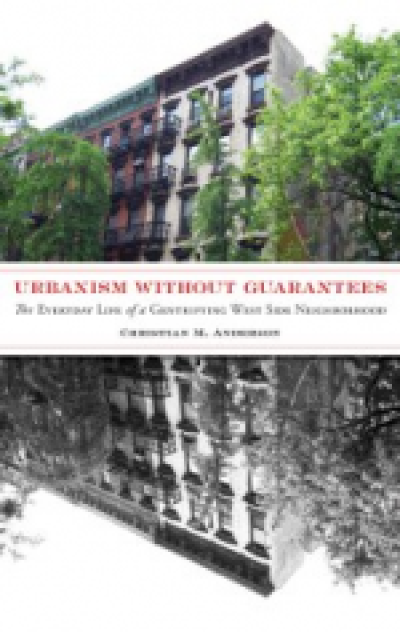
Urbanism without Guarantees is an ethnographic account of the contemporary everyday urban challenges of living in the far West Side of Midtown Manhattan in New York City, an area known as Clinton/Hell’s Kitchen.
This is the fifth book in the Diverse Economies and Liveable Worlds Series, and has featured in Community Economies News.
This document is an appendix to the Commons Transition Plan for the City of Sydney by the Sydney Commons Lab.

In this article I analyse beekeeping expertise as situated knowing in the precarious conditions of multispecies livelihoods. Beekeeping is knowledge-intensive: distinct expertise is required to keep colonies alive and thriving, to produce honey, and to support pollination – that is, to maintain livelihoods. The conditions in which beekeeping expertise is developed and enacted are precarious due to close entanglements with ultimately unintelligible non-human others and their changing habitats. Using ethnographic and interview data collected among urban beekeepers in Finland, I first describe the precariousness embedded in beekeeping as sharing lifeworlds and becoming with non-human others, particularly in an epoch characterized by severe environmental disturbances.
Planning for climate change is complex. There is some uncertainty about how quickly the climate will change and what the anticipated localised effects will be. There are also governance questions, for instance, who has the mandate to make decisions around the management of collective resources (like council infrastructure) and private property. Underlying these questions are issues of justice, equity and agency – who pays for the costs of adaptation and mitigation, and how do decision-makers engage with communities when what is ultimately needed is transformational socio-economic change?
A cursory examination of literature shows that religion and business are historically intertwined, with particular effects on society. Since the business/religion relationship is strongly driven by ethos, this relationship appears as an interesting and relevant issue in the case of social enterprises (hereafter SEs), which are value-driven initiatives. This chapter takes a look at the influence of religion on SEs in East Asia—the most religiously diverse region of the world. We start by analysing the influence of religion on international development discourse in recent decades, considering that major international development institutions have increasingly embraced SE as part of “sustainable development”.
Avec d’autres chercheuses et chercheurs engagés, je lutte pour rompre avec une conception universaliste du monde et opérer une transition vers un vivre-ensemble « centré sur le plurivers constitué d’une multiplicité de mondes enchevêtrés et co-constitutifs, mais distincts ». Dans le sillon de Dardot et Laval3, je comprends la révolution comme un moment d’accélération, d’intensification et de collectivisation d’une activité autonome et auto-organisée dans toutes les sphères de la vie économique, sociale, politique ou culturelle. Avec eux, je crois que le principe du commun est au coeur de ce projet révolutionnaire…
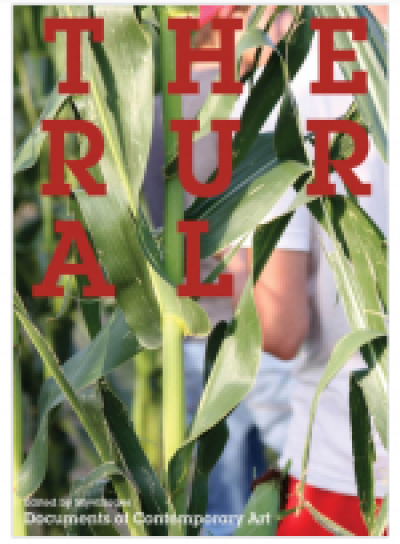
An investigation through texts, interviews, and documentation of the complex relationship between the urban, the rural, and contemporary cultural production.
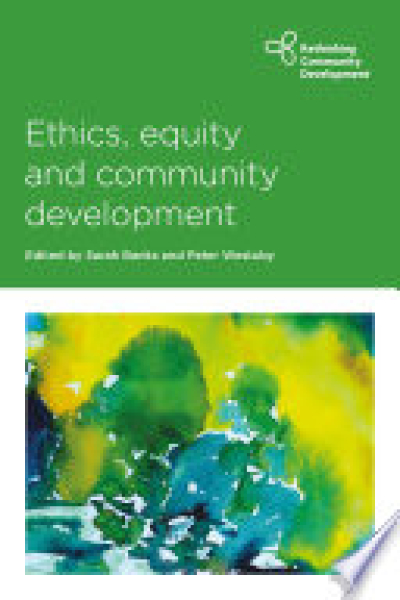
Community Economy theory has gained much traction over the past two decades as a language politics and an ethical tool kit for researchers and practitioners in the field of community development. This chapter examines Community Economy approaches to development using two empirical examples from quite different contexts that highlight key ethical concerns. In the two empirical examples we show how communities can move towards surviving well collectively by mapping their existing diverse economic practices and relationships, and how people can shift from focusing on their individual survival to collective survival.
Creative arts-based methods and methodologies are, of recent, seeing a (re)surgence in human geography. Much less explored by geographers, however, are creative arts-based methods and methodologies as agents of sociopolitical change or as modalities overlapping with the intensifying work of place-based engagements by critical, racialized, queer, feminist, anti-colonial, Indigenous, differently-abled and/or activists, artists, and scholars. This paper provides a broad historical overview of creativity and arts practice in geography. It then interrogates some of the shortcomings of current scholarship about creativity (in practice and theory) in the discipline.
Book translation of Veaux's & Rickert's More Than Two: A guide to ethical polyamory (Thorntree Press, 2014), translated from English to Finnish by Eeva Talvikallio, published by Basam Books, 2019.

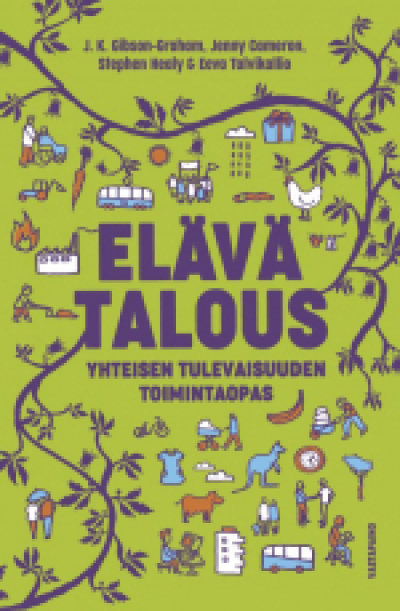
An updated and adapted Finnish language version of Take Back the Economy: An Ethical Guide for Transforming Our Communities by J.K. Gibson-Graham, Jenny Cameron, and Stephen Healy, University of Minnesota Press, 2013.
Click here for the website that can be used in conjunction with the English language version of the book.
It appears that an almost unquestioned development pathway for achieving gender equity and women’s empowerment has taken centre stage in mainstream development. This pathway focuses on economic outcomes that are assumed to be achieved by increasing women’s access to material things, including cash income, loans, physical assets, and to markets. Gender equity indicators, which measure progress toward these outcomes, cannot escape reinforcing them. We argue that far from being neutral; indicators are embedded in political and ideological agendas that serve as guides to the appropriate conduct of those whose performance or behaviour is being measured.
This is a revised and updated version of "Alternative Economies" first published in 2009 in the Elsevier Encyclopedia of Human Geography. The article draws on more recent diverse economies scholarship to illustrate a performative, as opposed to a realist, description of "alternativeness". Here alternative is understood in the context of the economy as an ontologically differentiated space, a space that is not organised by a singular logic, capitalist or otherwise. This has profound implications for the theory of change that informs diverse economies scholarly interventions.
Policy proposals about social change and well-being shape the implementation of applied theatre projects through technologies such as evaluation practices and funding applications. Representations of projects can, in turn, effect public discourse about who participants are and why they are or are not ‘being well’. Like public policy, applied theatre for social change has to establish a problem that needs to be solved. Drawing on debates about change in applied theatre literature, we consider how funders, governments, and communities call on applied theatre practitioners to frame particular issues and/or people as problematic.
Applied Theatre: Economies addresses a notoriously problematic area: applied theatre's relationship to the economy and the ways in which socially committed theatre makers fund, finance or otherwise resource their work.
Part One addresses longstanding concerns in the field about the effects of economic conditions and funding relationships on applied theatre practice. It considers how applied theatre's relationship with local and global economies can be understood from different theoretical and philosophical perspectives. It also examines a range of ways in which applied theatre can be resourced, identifying key issues and seeking possibilities for theatre makers to sustain their work without undermining their social and artistic values.
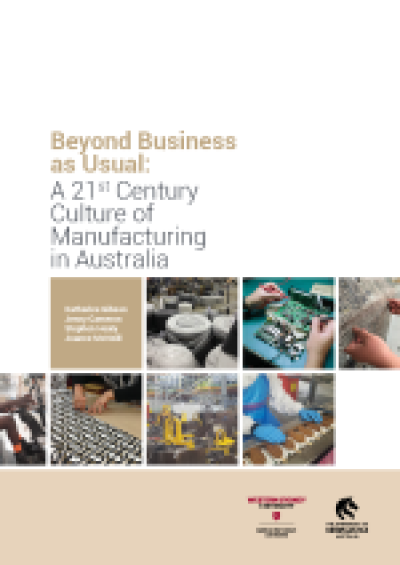
This report is based on in-depth research with ten manufacturers. It finds that along with operating dynamic and viable businesses these manufacturers are fostering a culture of just and sustainable manufacturing that is helping to tackle the social and environmental challenges of the 21st century.
The manufacturers include public corporations and cooperatives, and range from the privately-owned engineering firm, Varley Group, which is headquartered in the Hunter region and has been operating since 1886 to the not-for-profit social enterprise and clothing manufacturer, The Social Outfit, which was established in Newtown in Sydney in 2014.