
But what about the ecological capabilities? Relationality and school-based food gardening in the australian early years learning framework

Rachael Walshe
Ann Hill
Michele Foley
Bethaney Turner
Naomi Zouwer
Child with broadbean pockets

Highlights
•We emphasise integrating ecological capabilities in early education to prepare children for environmental challenges.
•We advocate for interconnectedness among humans, non-humans, and the environment in education.
•We highlight benefits of garden programs in fostering ecological awareness and relational skills.
•We suggest enhancing Australia's Early Years Learning Framework with garden-based ecological activities.
•We demonstrate how relational pedagogy in garden programs promotes inclusive and environmentally conscious learning.

A Conversation about the Weather
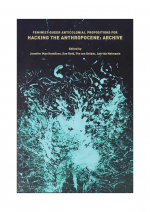
Abby Mellick Lopes
Louise Crabtree-Hayes
Front cover of book

Increasingly, other-than-scientific questions and creative expressions of climate change are gaining ground as legitimate forms of new knowledge in the fields of feminism, environmental humanities, environmental cultural studies and design studies, of which this piece of work is a part. The work offers a novel contribution to this interdisciplinary scholarship by creatively interpreting the perspectives, experiences and practices of people living with urban heat in Penrith NSW as an imagined conversation between a mother and child.

Calculating the Value of the Commons: Generating Resilient Urban Futures

Doina Petrescu
Constantin Petcou
Maliha Safri
Katherine Gibson

In this paper we present a method for valuing the multidimensional aspects of urban commons. This method draws from and contributes to a broader conception of social or community returns on investment, using the case and data of a vibrant project, strategy, and model of ecological resilience, R-Urban, on the outskirts of Paris. R-Urban is based on networks of urban commons and collective hubs supporting civic resilience practices.

Re-embedding Economies in Ecologies: Resilience Building in More than Human Communities

J.K. Gibson-Graham
Ann Hill
Lisa Law

The modern hyper-separation of economy from ecology has severed many of the ties that people have with environments and species that sustain life. In this paper we argue that a first step towards strengthening resilience at a human scale involves appreciating the longstanding social and ecological relationships that have supported life over the millennia. Our capacity to appreciate these relationships has, however, been diminished by economic science which encloses ecological space within more and more delimited confines.