Feminist Political Ecology practices of worlding: Art, commoning and the politics of hope in the class room

Wendy Harcourt

In the paper I argue that in a world where our lives are intricately interconnected and our environments are rapidly changing, commoning produces ecological imaginaries and understandings of places that could build a sense of global commons based on mutuality, reciprocity, and relationality. In exploring commoning in the international class room, my paper contributes to on-going dialogues community economies and feminist political ecology in the Community Economies Research Network (CERN), and the newly formed EU project Well-being, Ecology, Gender and cOmmunity (WEGO).

Kindness in giving? Giving to and through the arts in the time of COVID-19.

Mullen, M., & Lythberg, B.

This article uses kindness as a lens through which to analyse examples of giving to and through the arts in Aotearoa during the first year of COVID-19. We consider whether the exceptional conditions created by COVID-19 caused reconsideration of the way the arts look after society and why and how societies need to look after the arts. We do so by critically examining state and private giving to the arts in Aotearoa New Zealand, from March 2020-March 2021, alongside large- and small-scale artistic gestures of giving. It appears that a ‘kinder’ economy for the arts emerged during this time.

Artful Evaluation for Creative Health and Wellbeing

Molly Mullen
Rand Hazou
Sarah Woodland
Artful Evaluation cover

This open access book presents new methods for evaluating the contribution of participatory arts to health and wellbeing. Responding to shifts in arts and health discourse, it argues for challenging long-standing ideas about how value is theorised, measured, and communicated. This book critiques the dominance of social impact as the primary way of understanding change in arts, health, and wellbeing, proposing instead evaluation approaches grounded in contemporary Indigenous, post-humanist, and postcapitalist theories.

Techniques for shifting economic subjectivity: Promoting an assets-based stance with artists and artisans

Abby Templer Rodrigues

In the early 2000s the minority world turned towards the creative sector to revitalize regional economies. The resulting development policies ultimately led to gentrification and social exclusion based on race, ethnicity, class and gender. These exclusions also apply to artists and artisans, occupational groups whose economic activity and needs have been paradoxically erased from dominant creativity-based development prescriptions.

Pouring Out Pouring In: Mapping Women's Work

Ailie Rutherford, Caroline Gausden and Louise Lawson
black, red and gold printed image, using block print to map out intersecting economies

Artist Ailie Rutherford has been working with Glasgow Women’s Library (GWL) to visualise the complex nature of work and care for many women. The Pouring Out, Pouring In exhibition shares prints and other outcomes from the Mapping Women’s Work workshop series at GWL. Building on a University of Glasgow study, the women involved have mapped out their multiple paid and unpaid roles, thinking together about how a more equitable economic system might look. 

Enabling Life in Vacant Spaces: A partnership approach to evaluating holistic wellbeing in disaster recovery contexts

Kelly Dombroski
Gradon Diprose
Matthew Scobie
Amanda Yates

This report outlines two approaches to assessing the intentions and outcomes of the non-governmental organisation, Life in Vacant Spaces (LiVS), in Ōtautahi Christchurch. Ōtautahi Christchurch presents a useful case study for wellbeing as it continues to recover from the physical and psychological trauma of earthquakes. 
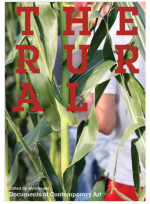
The Rural

Kathrin Böhm and Wapke Feenstra (editors)
The Rural (cover)

An investigation through texts, interviews, and documentation of the complex relationship between the urban, the rural, and contemporary cultural production.


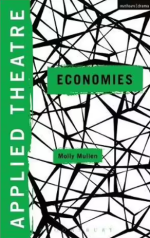
Applied Theatre: Economies

Molly Mullen
Applied Theatre, Economies

Applied Theatre: Economies addresses a notoriously problematic area: applied theatre's relationship to the economy and the ways in which socially committed theatre makers fund, finance or otherwise resource their work.