
Commoning and the politics of solidarity: Transformational responses to poverty

Stephen Healy
Craig Borowiak
Marianna Pavlovskaya
Maliha Safri

This paper stages an encounter between Relational Poverty Theory (RPT) and the solidarity economy movement. RPT understands poverty as the dynamic product of economic exploitation, political exclusion and cultural marginalization. The solidarity economy movement can be seen as a transformative political response to these dynamics aiming to replace exploitation with cooperation, exclusion with participation and marginalisation with practices of inclusion.
Framing essay: the diversity of property

Kevin St. Martin

Property concerns exclusive rights to the access and use of a resource, the possession of an object or territory with a right to exclude others, or the ability to dispose of or exchange an owned object. The particular property regime that has, for at least the minority world, become a ‘common sense’ is a private and individualized notion of property that is manifest in legal title and state enforcement.

Inclusión sociolaboral en clave de salud mental comunitaria: una perspectiva geográfica

Ana Inés Heras, David Burin, Julia De la Fuente Goldman, Pablo Matías Herrera, Movida de Locos, Marcelo Vieta

En este artículo analizamos las situaciones de acceso al lugar de emplazamiento actual de varios grupos pre-cooperativos que encuadran en la denominación de “cooperativas sociales” que se nuclean en un entramado más amplio, el de una Asociación Civil denominada Integración Comunitaria por la Salud Mental Una Movida de Locos (MdL), situada en la Ciudad de La Plata, Provincia de Buenos Aires, Argentina. En este texto proponemos

Born out of Struggle in Argentina: Bachilleratos Populares with/in/against the State

Gary L. Anderson
Dipti Desai
Ana Inés Heras
Carol Anne Spreen

The economic implosion in the late 1990s in Argentina created the conditions for the emergence of a series of alternative social organizations that were autogestionados, or created from the ground up by unemployed
workers, social activists, artists, and educators. Here, we describe one of these social organizations, Bachillerato Popular IMPA, which is located within an abandoned factory that was recuperated to form a workers’ cooperative.

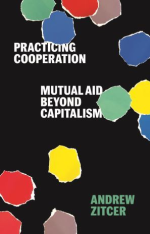
Practicing Cooperation: Mutual Aid beyond Capitalism

Andrew Zitcer
Practicing cooperation

From the crises of racial inequity and capitalism that inspired the Black Lives Matter movement and the Green New Deal to the coronavirus pandemic, stories of mutual aid have shown that, though cooperation is variegated and ever changing, it is also a form of economic solidarity that can help weather contemporary social and economic crises. Addressing this theme, Practicing Cooperation delivers a trenchant and timely argument that the way to a more just and equitable society lies in the widespread adoption of cooperative practices.

Procesos de subjetivación y aprendizaje cooperativo

Burin David; Heras Ana Inés; Rodrigo Tejerina; Diego Navarro; Ayelén Straini; Fabián Morelli; Andrea Blanco y Milena Caputa

The processes of subjectivation within a cooperative of workers in the City of Rosario, Argentina, are analyzed and interpreted in relation to literature in the fields of philosophy, economic geography, ethnographies and sociolinguistics. This text has been written by a team of 8 people (two collaborative researchers and six workers researchers).