
Coloniality and Indigenous ways of knowing at the edges: Emplacing Earth kin in conservation communities

Elaina J. W. Weber
Elizabeth S. Barron

Participation of Indigenous peoples and local communities is encouraged in calls for sustainable transitions and transformations. The term ‘community’ is widely used yet nebulously defined. Conservation that removes people from their communities of land invokes epistemological authority and displaced relationships. We relate our work to the articles in this special issue to rethink the relationship between humans and nature in conservation. We propose expanding the term ‘local communities’ to include more than just humans.

Care-full Community Economies
Kelly Dombroski
Stephen Healy
Katharine McKinnon
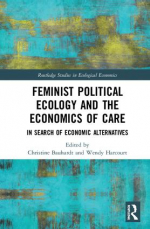
Image of book cover, feminist political ecology and the politics of care

In this era of human-induced environmental crisis, it is widely recognized that we need to foster better ways to sustain life for people and planet. For us – and other scholars drawing on the Community Economies tradition – better worlds begin in recognising the diverse and interconnected ways human communities secure our livelihoods. Community Economies scholarship is a body of theory that evolved from the writings of geographers J.K. Gibson-Graham, which, for more than thirty years, has inspired others (including the three of us) to rethink economy as a space of political possibility.

Making Space for Community Resource Management in Fisheries

Kevin St. Martin

This article draws on field research in New England to challenge conventional individualized accounts of fishery dynamics and develop a representation of fisheries as diverse sites of community organization and cooperative management of common property. This is a "re-mapping," both literal and figurative, of the landscapes of fishery practice as a strategy to open more possibilities for communal resource management.