Feminist Political Ecology practices of worlding: Art, commoning and the politics of hope in the class room

Wendy Harcourt

In the paper I argue that in a world where our lives are intricately interconnected and our environments are rapidly changing, commoning produces ecological imaginaries and understandings of places that could build a sense of global commons based on mutuality, reciprocity, and relationality. In exploring commoning in the international class room, my paper contributes to on-going dialogues community economies and feminist political ecology in the Community Economies Research Network (CERN), and the newly formed EU project Well-being, Ecology, Gender and cOmmunity (WEGO).
Rethinking life-in-common in the Australian landscape

Wendy Harcourt

This commentary reflects on the shifts in my personal and political lifeworld across time and space by sharing a story of changing awareness about ‘life-in-common’ in the Australian landscape; a landscape that is marked by historical, ecological and resource struggle and injustice. My commentary takes up the rethinking of differential belonging and ‘life-in-common’ as part of the search for alternatives to capitalism and a way to overcome socioecological crises which pays attention to the deep connections of nature and culture.

The politics of knowledge: Feminist strategies for transformation

Wendy Harcourt

In my commentary, I take up the challenge of finding an academically fuelled strategy to make the necessary deep inroads into the Sustainable Development Goals by looking at lessons learnt from the struggles of the transnational feminist movement involved in UN multilateral debates and the transformative work of feminist political ecology on the ethics of care and caring-with others, including more-than-human others. I propose these feminist strategies offer some insights in how to shift dominant knowledge systems.

Earthcare

Wendy Harcourt

‘Earthcare’ is a term that is emerging in environmental humanities from feminist and indigenous research and practice that aims to capture the historical relations of care between humans and nature. By bringing together the terms ‘earth’ and ‘care,’ ’Earthcare’ refers to the life-making and life-sustaining activities that maintain humans and more-than-humans in their lifeworlds. I use the term ‘care’ to mean the social, political, ecological, and embodied processes necessary to nurture relationships, responsibilities, and accountabilities for flourishing lifeworlds.

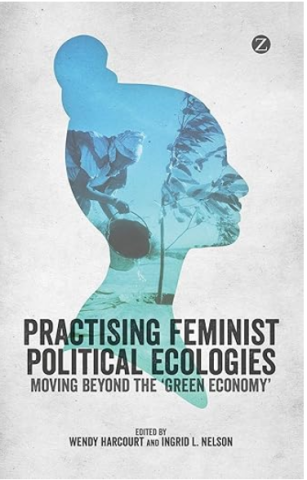
Practising Feminist Political Ecologies: Moving Beyond the 'Green Economy'

Wendy Harcourt
Ingrid L. Nelson
Practising Feminist Political Ecologies: Moving Beyond the 'Green Economy'

Destined to transform its field, this volume features some of the most exciting feminist scholars and activists working within feminist political ecology, including Giovanna Di Chiro, Dianne Rocheleau, Catherine Walsh and Christa Wichterich. Offering a collective critique of the 'green economy', it features the latest analyses of the post-Rio+20 debates alongside a nuanced reading of the impact of the current ecological and economic crises on women as well as their communities and ecologies.

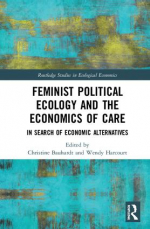
Feminist Political Ecology and the Economics of Care: In Search of Economic Alternatives

Christine Bauhardt
Wendy Harcourt
Feminist Political Ecology and the Economics of Care: In Search of Economic Alternatives

This book envisages a different form of our economies where care work and care-full relationships are central to social and cultural life. It sets out a feminist vision of a caring economy and asks what needs to change economically and ecologically in our conceptual approaches and our daily lives as we learn to care for each other and non-human others.

Care-full Community Economies

Kelly Dombroski
Stephen Healy
Katharine McKinnon
Image of book cover, feminist political ecology and the politics of care

In this era of human-induced environmental crisis, it is widely recognized that we need to foster better ways to sustain life for people and planet. For us – and other scholars drawing on the Community Economies tradition – better worlds begin in recognising the diverse and interconnected ways human communities secure our livelihoods. Community Economies scholarship is a body of theory that evolved from the writings of geographers J.K. Gibson-Graham, which, for more than thirty years, has inspired others (including the three of us) to rethink economy as a space of political possibility.